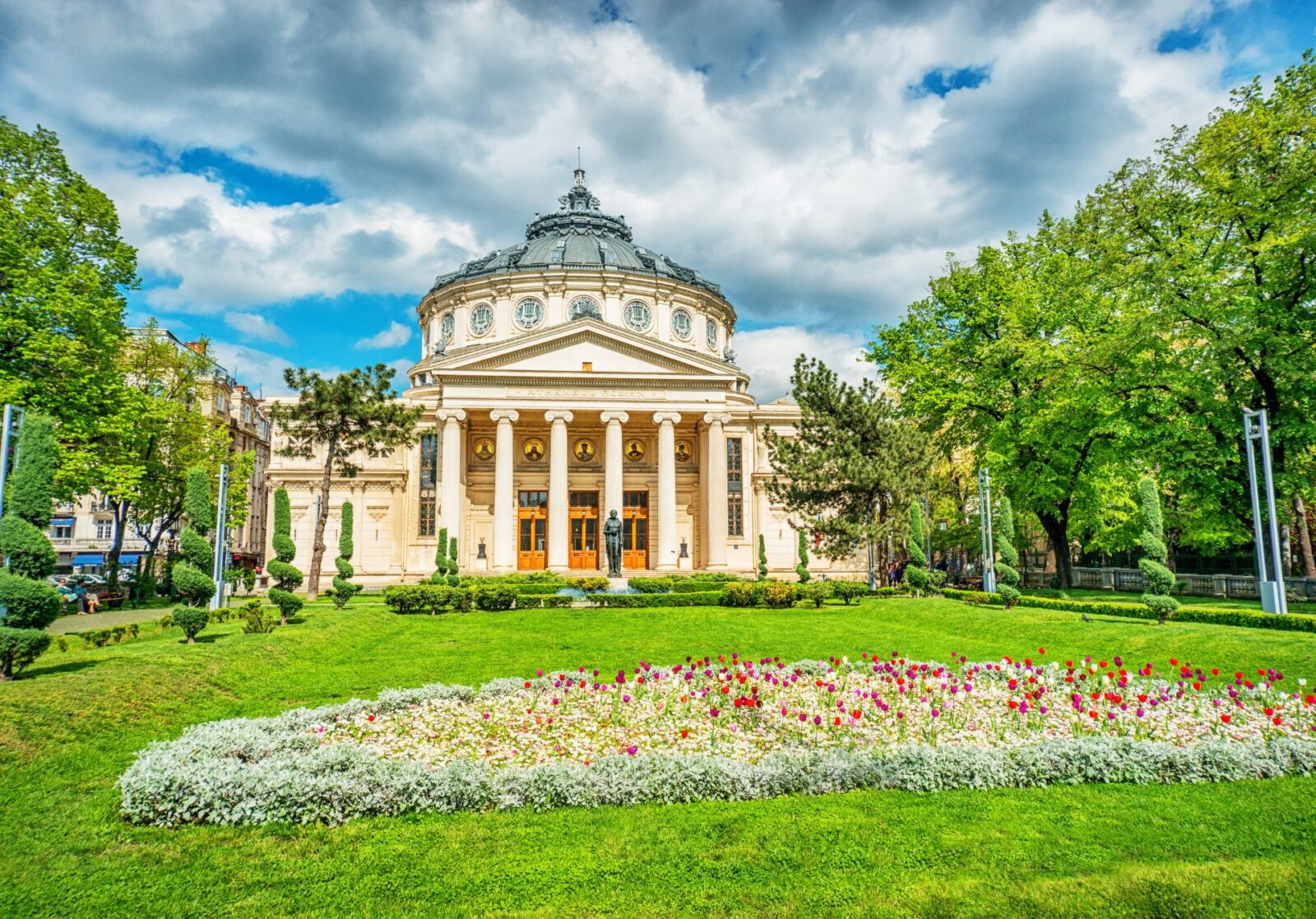
Romanian Athenaeum
Nestled in the heart of Bucharest, the Romanian Athenaeum stands as a testament to Romania’s rich cultural heritage and architectural brilliance. Constructed between 1886 and 1888, this remarkable concert hall represents more than just a building—it is a symbol of national pride and artistic achievement. Designed by the French architect Albert Galleron, the Athenaeum emerged during a period of significant cultural renaissance in Romania, reflecting the country’s aspirations for European cultural sophistication.
The building’s neoclassical design was revolutionary for its time, combining elements of Ionic architecture with distinctive Romanian artistic sensibilities. Its most striking feature is the magnificent dome, which rises majestically above the city’s landscape, creating an iconic silhouette that has become synonymous with Bucharest’s cultural identity.
Architectural Marvel: Design and Construction
The Romanian Athenaeum’s construction was a remarkable feat of engineering and artistic vision. Funded through a national lottery—a testament to the public’s commitment to cultural development—the building cost approximately 620,000 gold lei, an enormous sum for the late 19th century. Its circular design and exceptional acoustics were carefully engineered to create an optimal environment for musical performances.
The interior is equally breathtaking, featuring a stunning fresco that wraps around the main hall, depicting pivotal moments in Romanian history. This massive artwork, created by painter Gheorghe Tattărescu, spans an impressive 75 meters in length and 3 meters in height, serving as a visual narrative of the nation’s journey.
Cultural Significance and Musical Heritage
Since its inauguration, the Romanian Athenaeum has been the premier concert venue in Bucharest, hosting performances by world-renowned musicians and orchestras. The George Enescu Philharmonic, which calls this venue home, has made it a cornerstone of Romania’s classical music scene. International artists like Herbert von Karajan and Leonard Bernstein have graced its stage, cementing its reputation as a world-class musical venue.
Interestingly, the Athenaeum was not just a musical space but also a critical intellectual hub. During various historical periods, it served as a gathering place for Romania’s cultural and political elite, hosting lectures, debates, and important national discussions.
Preservation and Modern Restoration
Throughout the 20th century, the Athenaeum underwent several significant restoration projects. Notable renovations occurred in 1934, 1984, and most recently between 2005-2010, when extensive work was done to preserve its structural integrity and restore its original splendor. These restoration efforts have been crucial in maintaining the building’s architectural and cultural significance.
In 2007, the Romanian Athenaeum was declared a UNESCO Heritage Site, recognizing its outstanding universal value and importance to global cultural heritage. This designation has further elevated its status as not just a national treasure, but a monument of international significance.
The Romanian Athenaeum transcends its physical structure, embodying the artistic spirit and cultural ambition of Romania. It represents a harmonious blend of architectural elegance, historical narrative, and ongoing musical tradition. More than a concert hall, it is a living museum that continues to inspire, educate, and entertain generations of Romanians and international visitors alike.
As it approaches its 140th year, the Athenaeum remains a vibrant symbol of cultural excellence—a place where history, art, and music converge to tell the ongoing story of Romania’s rich and complex heritage.