Revolution Square
Situated in the heart of Bucharest, Revolution Square (Piața Revoluției) stands as a powerful symbol of Romania’s tumultuous journey from communist oppression to democratic freedom. This iconic location has witnessed some of the most transformative moments in the nation’s modern history, serving as a backdrop to pivotal events that would reshape the country’s political and social landscape.
The Communist Era and Systematic Repression
During the decades of communist rule under Nicolae Ceaușescu, Revolution Square represented the epicenter of state power. The Royal Palace, which stands prominently in the square, was transformed into the headquarters of the Communist Party, symbolizing the regime’s absolute control over Romanian society. Ceaușescu’s megalomaniacal vision was epitomized by his massive administrative buildings that dominated the architectural landscape, reflecting the totalitarian ideology of the time.
The Dramatic Days of December 1989
The square became the literal and metaphorical battleground during the Romanian Revolution of December 1989. On December 21, 1989, Ceaușescu attempted to deliver a public speech from the balcony of the Central Committee building, hoping to quell growing public dissent. However, in an unprecedented moment of collective courage, the crowd began to openly challenge the dictator, marking the beginning of the end of his regime.
The subsequent days were marked by intense street battles, with citizens confronting security forces and military units. Violent clashes transformed the square into a symbolic arena of resistance, where ordinary Romanians fought for their fundamental rights and freedom. Estimates suggest that over 1,000 people lost their lives during these critical days, with many of the casualties occurring in and around Revolution Square.
Memorial and Remembrance
Today, Revolution Square serves as a poignant memorial to those who sacrificed their lives during the revolution. The Memorial of Rebirth, a striking sculptural monument erected in 2005, stands as a permanent tribute to the heroes of the revolution. The sculpture, depicting a metaphorical human body pierced by a stake, powerfully symbolizes the painful process of Romania’s liberation from communist tyranny.
Contemporary Significance
Beyond its historical importance, Revolution Square continues to be a vibrant public space that embodies Romania’s democratic spirit. It remains a crucial location for public gatherings, political demonstrations, and cultural events. The square represents more than just a geographical location; it is a living testament to the power of collective action and the enduring human desire for freedom.
Architectural and Cultural Landmarks
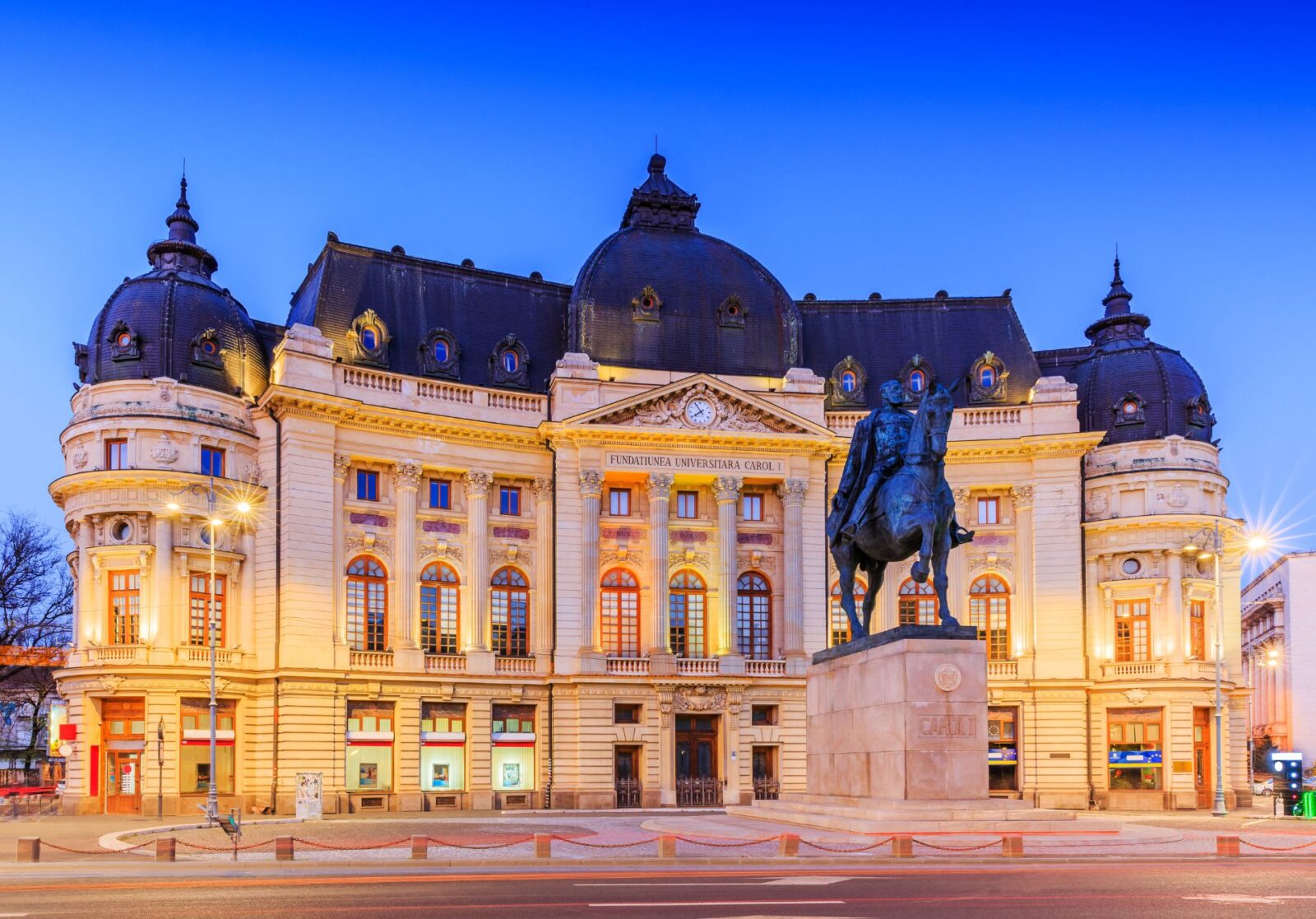
The square is surrounded by significant buildings that tell the story of Romania’s complex history. The Royal Palace, now the National Museum of Art, the Romanian Athenaeum, the Crețulescu Church, and the University Library all stand as architectural witnesses to different epochs of Romanian society, creating a rich, layered historical narrative.
Revolution Square encapsulates Romania’s journey from a repressive communist regime to a democratic society. It stands as a powerful reminder of the courage of those who fought for freedom, the transformative power of collective action, and the ongoing process of national healing and progress. The square is not just a physical space, but a living memory of Romania’s most critical historical moments.