Stavropoleos Monastery
Nestled in the historic center of Bucharest, the Stavropoleos Monastery stands as a testament to Romania’s rich religious and architectural heritage. This small but remarkable Orthodox monastery is more than just a place of worship—it is a living museum that captures the essence of Romanian ecclesiastical art and cultural preservation.
Historical Origins and Founding
Founded in 1724 by Greek monk Ioanichie, the Stavropoleos Monastery was originally established as a monastery and inn for traveling merchants. Its name, derived from the Greek words “stavros” (cross) and “polis” (city), symbolizes its spiritual significance and urban location.
Architectural Masterpiece: Byzantine and Brâncovenesc Styles
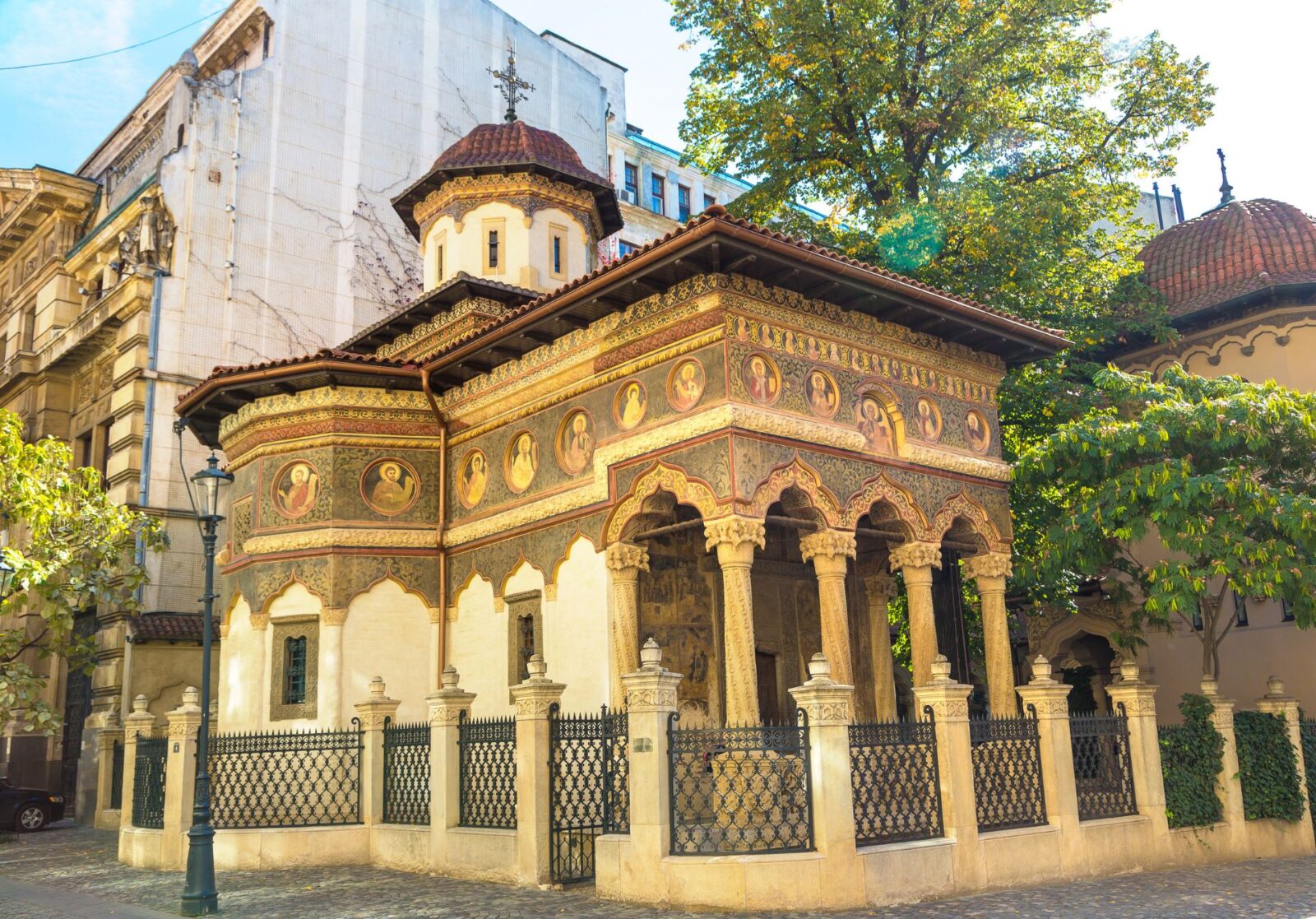
The monastery represents a stunning fusion of Byzantine and Brâncovenesc architectural styles, characterized by intricate stone carvings, delicate frescoes, and elegant proportions. Its compact size belies the complexity of its design, with every architectural element carefully crafted to create a harmonious spiritual space.
Unique Structural Features
Despite its modest dimensions—measuring just 25 by 8 meters—the monastery boasts remarkable architectural details. The facade features elaborate stone decorations, while the interior showcases exquisite wooden iconostasis and centuries-old religious artifacts.
Preservation and Restoration Efforts
Throughout its history, the Stavropoleos Monastery has survived numerous challenges, including earthquakes and political upheavals. Significant restoration efforts in the late 20th and early 21st centuries have preserved its structural integrity and artistic treasures.
The Monastery’s Museum Collection
Today, the monastery houses an impressive collection of over 700 rare books, liturgical objects, and religious artifacts dating from the 16th to 19th centuries. This collection provides invaluable insights into Romanian religious art and ecclesiastical history.
Spiritual and Cultural Significance
Beyond its architectural beauty, Stavropoleos Monastery serves as a critical cultural institution. It represents a living connection to Romania’s Orthodox traditions, preserving spiritual practices and artistic techniques that have been passed down through generations.
Monastic Community and Daily Life
A small community of nuns continues to maintain the monastery, ensuring that its spiritual and cultural legacy remains vibrant. They conduct daily services, maintain the historical collections, and welcome visitors interested in understanding the monastery’s rich heritage.
Visitor Experience and Cultural Impact
Located in Bucharest’s historic Lipscani district, the monastery attracts thousands of visitors annually. Its central location and architectural significance make it a must-visit destination for tourists interested in Romanian history, religious art, and architectural heritage.
The Stavropoleos Monastery stands as more than just a religious building—it is a profound symbol of Romanian cultural resilience. Its intricate architecture, preserved artifacts, and continuous spiritual practice represent a remarkable bridge between past and present, inviting visitors to explore the depth and beauty of Romania’s religious and artistic traditions.