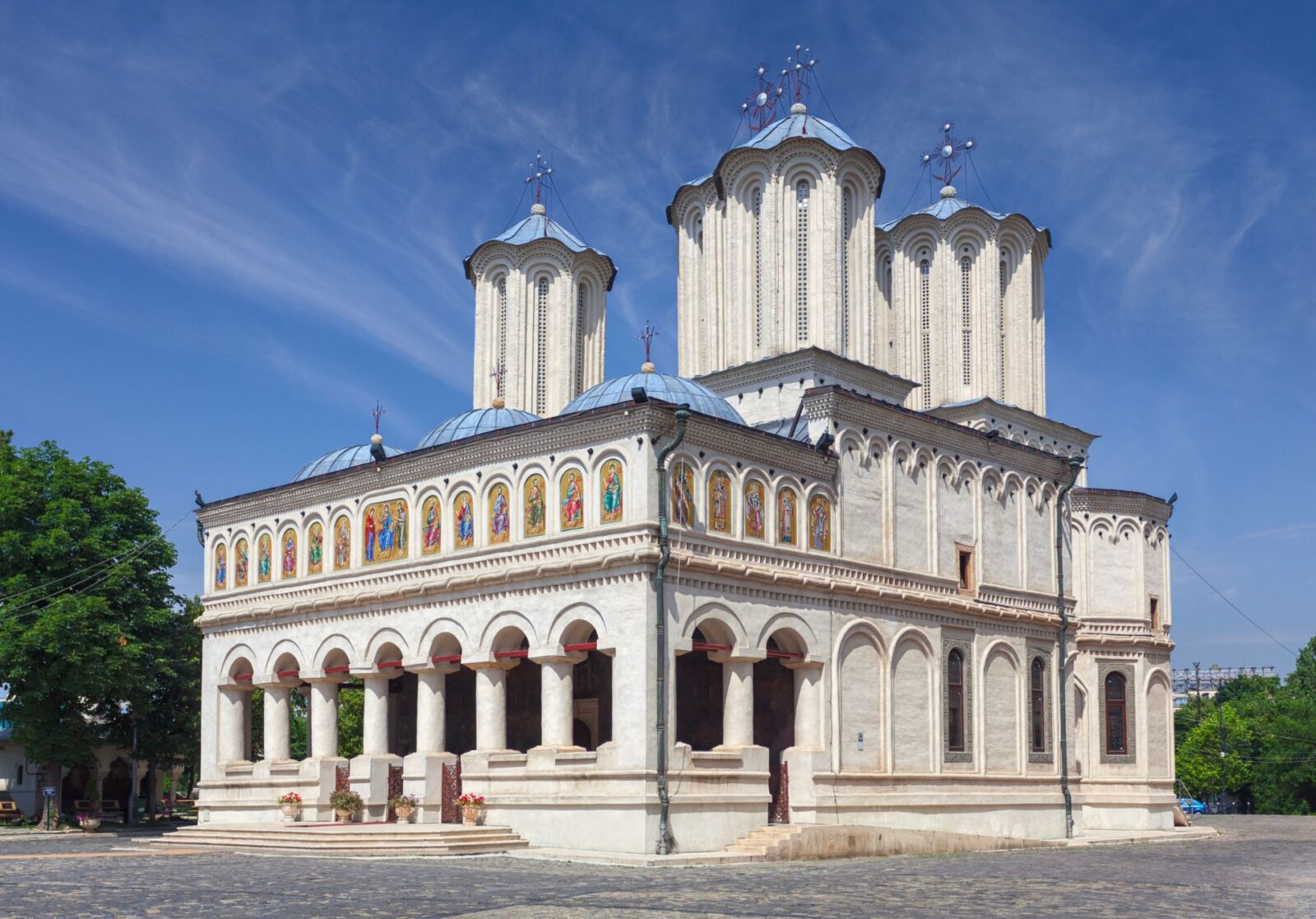
Romanian Patriarchal Cathedral
The Romanian Patriarchal Cathedral, situated in the heart of Bucharest, stands as a profound symbol of Romanian Orthodox spirituality and national identity. Located on Dealul Mitropoliei (Metropolitan Hill), this magnificent cathedral represents more than just an architectural marvel—it embodies centuries of religious and cultural heritage that have shaped Romania’s spiritual landscape.
Constructed between 1656 and 1658 during the reign of Prince Constantin Şerban, the cathedral emerged during a pivotal period of Romanian history. It was initially built as the metropolitan church of Wallachia, serving as the primary religious center for the region’s Orthodox population.
Architectural Characteristics
The cathedral exemplifies the traditional Brâncovenesc architectural style, a unique Romanian Renaissance aesthetic that blends Byzantine and local architectural elements. Its exterior features characteristic Romanian Orthodox design, with intricate stone carvings, balanced proportions, and a harmonious color palette that reflects the region’s artistic traditions.
Notable architectural features include:
- Byzantine-inspired dome structure
- Elaborate stone masonry
- Carefully preserved historical frescoes
- Ornate interior decorations representing religious iconography
Religious and National Importance
Beyond its architectural beauty, the Romanian Patriarchal Cathedral holds immense spiritual and national significance. In 1925, it was elevated to the status of a patriarchal cathedral, marking a crucial moment in Romanian ecclesiastical history. This designation symbolized the autocephaly of the Romanian Orthodox Church and its independence from other Orthodox jurisdictions.
The cathedral has witnessed numerous pivotal historical moments, serving as a spiritual refuge during times of political upheaval and national transformation. It continues to play a critical role in Romanian religious and cultural life, hosting important liturgical celebrations and national commemorative events.
Cultural and Touristic Impact
Today, the Romanian Patriarchal Cathedral attracts thousands of visitors annually, both pilgrims and tourists interested in Romania’s rich cultural heritage. Its strategic location overlooking Bucharest provides not only spiritual inspiration but also breathtaking panoramic views of the capital city.
Statistical data indicates that approximately 80% of Romanians identify as Orthodox Christians, making the cathedral a crucial representation of the nation’s predominant religious identity. The site receives an estimated 500,000 visitors annually, underscoring its cultural and historical importance.
Preservation and Restoration Efforts
Continuous restoration efforts have been crucial in maintaining the cathedral’s structural integrity and historical authenticity. Various governmental and ecclesiastical organizations collaborate to ensure that this national monument remains pristine for future generations.
Major restoration projects have focused on preserving the original Brâncovenesc architectural elements, protecting delicate frescoes, and reinforcing the structural foundations against potential seismic activities—a significant consideration in Romania’s earthquake-prone region.
The Romanian Patriarchal Cathedral transcends its role as a mere religious structure. It stands as a living testament to Romania’s spiritual resilience, architectural ingenuity, and cultural continuity. From its historical origins to its contemporary significance, the cathedral represents a bridge connecting Romania’s rich past with its dynamic present.
As a beacon of Orthodox spirituality and national pride, the Romanian Patriarchal Cathedral continues to inspire, educate, and remind visitors of the profound spiritual and cultural depths of the Romanian nation.