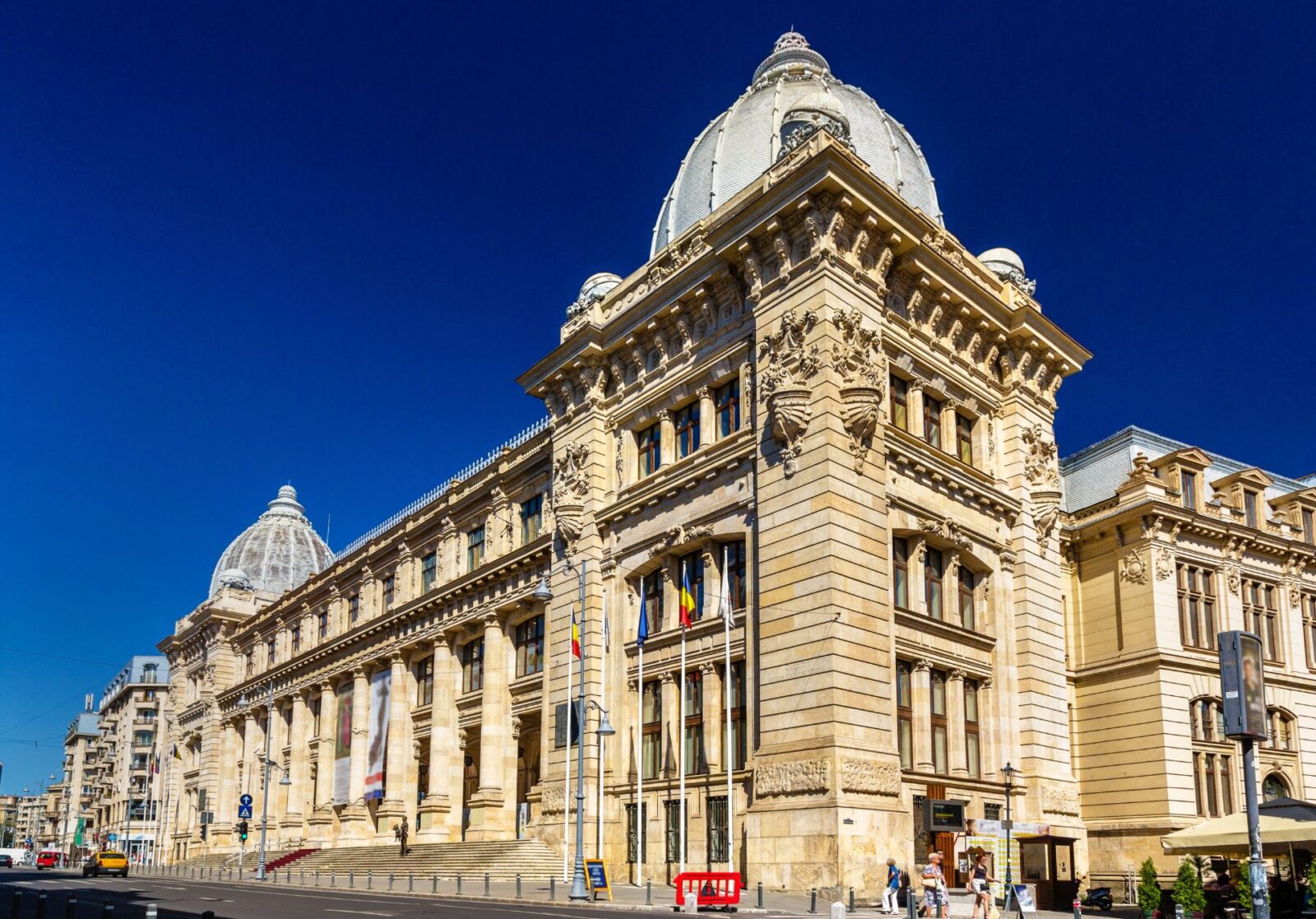
National Museum of Romanian History
Located in the heart of Bucharest, the National Museum of Romanian History stands as a monumental testament to Romania’s complex and fascinating historical narrative. Founded on 11 October 1970, the museum occupies a magnificent neoclassical building that was originally constructed between 1812 and 1890, serving previously as the city’s postal services headquarters.
The museum’s creation was a deliberate effort by Romanian authorities to consolidate and showcase the nation’s historical artifacts, archaeological discoveries, and cultural heritage under one prestigious roof. Its strategic location in the historic center of Bucharest symbolizes its importance as a cultural institution dedicated to preserving and interpreting Romanian history.
Architectural Marvel: The Building’s Significance
The museum’s home is itself a historical landmark. Designed in the neoclassical style typical of late 19th-century European public buildings, the structure represents an architectural gem that reflects the grandeur of Romania’s modernization period. Its imposing facade, with intricate details and classical proportions, serves as a fitting backdrop for the historical narratives contained within.
Permanent Collections and Exhibitions
The museum boasts an extensive collection spanning prehistoric times to the modern era. Key exhibitions include:
- Prehistoric Romania: Exhibits featuring Paleolithic and Neolithic artifacts
- Dacian and Roman Galleries: Showcasing the complex interactions between indigenous Dacian populations and Roman colonizers
- Medieval Romanian Exhibits: Displaying artifacts from the medieval principalities of Wallachia and Moldavia
- Modern and Contemporary History Sections: Documenting Romania’s journey through the 19th and 20th centuries
Highlights of the Permanent Collection
Among the museum’s most prized possessions are the National Treasury, which includes remarkable gold artifacts from the Dacian civilization, and a comprehensive collection of medieval weapons and archaeological finds that provide profound insights into Romanian cultural evolution.
Research and Educational Role
Beyond exhibition, the National Museum of Romanian History plays a crucial role in academic research and public education. It collaborates with international archaeological teams, hosts scholarly conferences, and develops educational programs designed to engage students and researchers in understanding Romania’s historical trajectory.
Visitor Experience and Accessibility
Located at 12 Lipscani Street in Bucharest’s historic center, the museum is easily accessible to both local and international visitors. It offers guided tours, multilingual informational materials, and interactive displays that make historical learning engaging and comprehensive.
Challenges and Preservation Efforts
Like many national museums, the institution faces ongoing challenges of artifact preservation, funding, and technological modernization. Continuous efforts are made to digitize collections, implement conservation techniques, and develop innovative ways of presenting historical narratives to contemporary audiences.
The National Museum of Romanian History is more than a repository of artifacts; it is a dynamic cultural institution that narrates the complex story of a nation. Through its carefully curated exhibitions, robust research initiatives, and commitment to historical preservation, the museum offers visitors a profound understanding of Romania’s rich and multifaceted historical experience.
By bridging past and present, the museum not only preserves historical memory but also provides critical context for understanding contemporary Romanian identity and cultural heritage.