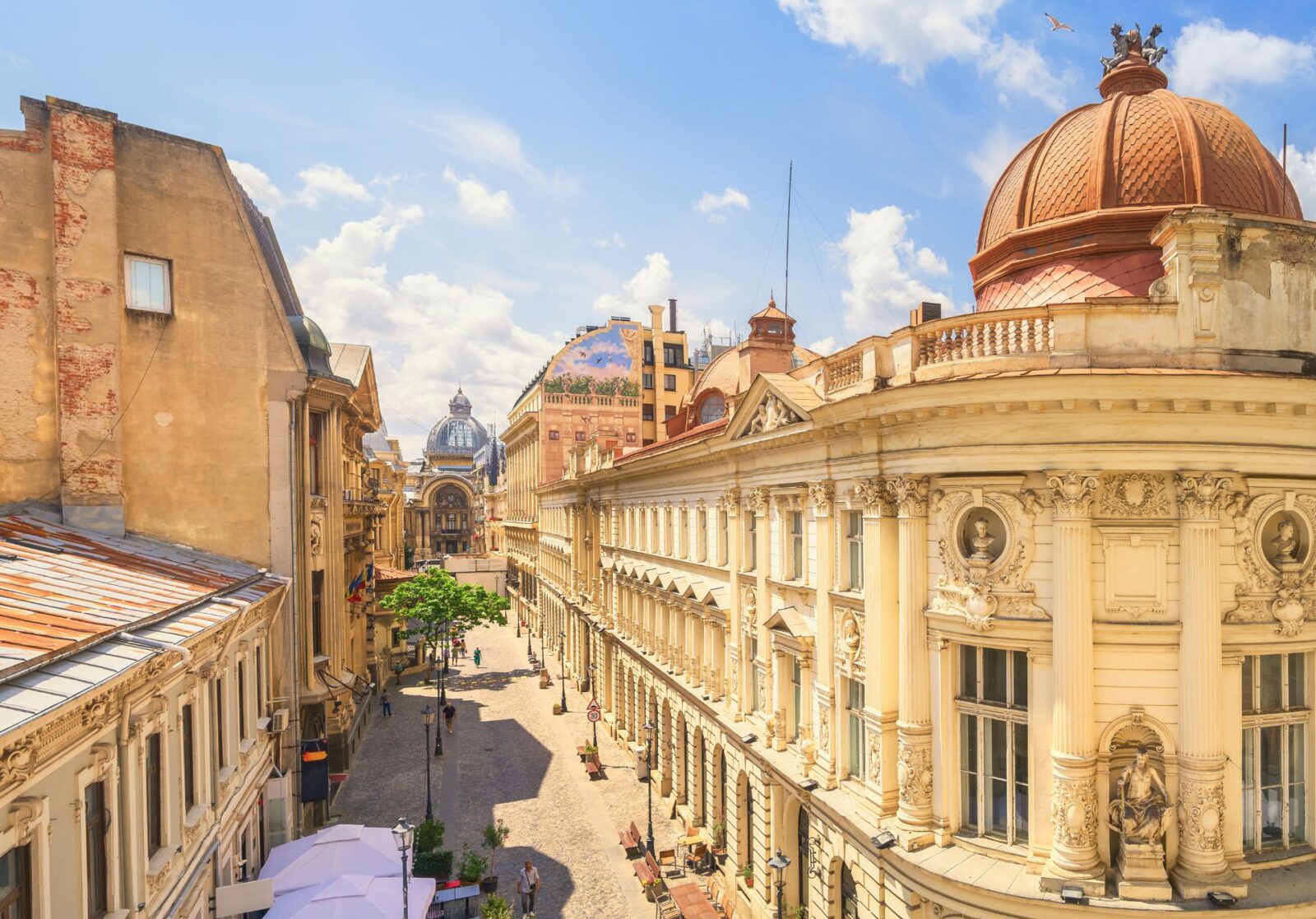
Old Town (Lipscani)
Lipscani, nestled in the heart of Bucharest, represents more than just a neighborhood—it is a living museum of Romanian urban history. Dating back to the 15th century, this district emerged as a crucial commercial center where merchants from various regions converged to trade their goods. The name “Lipscani” itself derives from the German word “Leipzig,” reflecting the significant trade connections with Central European markets during the medieval period.
Architectural Heritage: A Mosaic of Historical Styles
The architectural landscape of Old Town is a breathtaking blend of architectural styles that narrate Bucharest’s complex historical journey. Baroque, Neoclassical, Art Nouveau, and Communist-era buildings stand shoulder to shoulder, creating a unique urban canvas. Notable structures like the Stavropoleos Monastery, dating from 1724, showcase exquisite brâncovenesc architectural style, while nearby buildings demonstrate the eclectic architectural influences that have shaped the neighborhood.
Economic Transformation: From Medieval Marketplace to Modern Entertainment District
Throughout the 19th and early 20th centuries, Lipscani was the commercial epicenter of Bucharest. Prestigious shops, banks, and craft workshops lined its cobblestone streets. However, the area experienced significant decline during the Communist era and the subsequent economic transitions of the late 20th century. By the early 2000s, many buildings were dilapidated, and the neighborhood seemed forgotten.
Urban Revitalization: A Phoenix Rising from the Ashes
The early 2000s marked a remarkable turning point for Lipscani. Extensive restoration projects, supported by both private investments and European Union funds, transformed the neighborhood. Between 2007 and 2013, approximately €20 million was invested in restoring historical buildings, creating a vibrant urban space that attracts tourists and locals alike.
Cultural and Nightlife Epicenter
Today, Lipscani has reinvented itself as Bucharest’s premier entertainment and cultural district. With over 200 restaurants, bars, and cultural venues concentrated in a compact area of roughly 0.5 square kilometers, the neighborhood pulses with energy. Traditional Romanian restaurants coexist with international cuisine, trendy cafes, and historic pubs, creating a diverse culinary landscape.
Preserving Historical Authenticity
Despite its modern transformation, Lipscani has maintained strict preservation guidelines. The National Institute of Historical Monuments oversees restoration projects, ensuring that any renovation respects the original architectural integrity. This commitment has helped Lipscani retain its historical charm while adapting to contemporary urban needs.
Tourism and Economic Impact
The revitalization of Lipscani has been economically transformative. Before 2000, the area attracted fewer than 50,000 annual visitors. By 2019, this number had surged to over 500,000 international tourists, significantly contributing to Bucharest’s tourism economy. The neighborhood now generates an estimated €50 million annually in tourism and hospitality revenues.
Lipscani represents more than a geographical location—it embodies Bucharest’s resilience, adaptability, and cultural richness. From medieval trading post to decaying Communist-era district to a vibrant modern urban center, this neighborhood has continuously reinvented itself. It stands as a powerful symbol of Romania’s capacity for transformation, preservation, and cultural celebration.